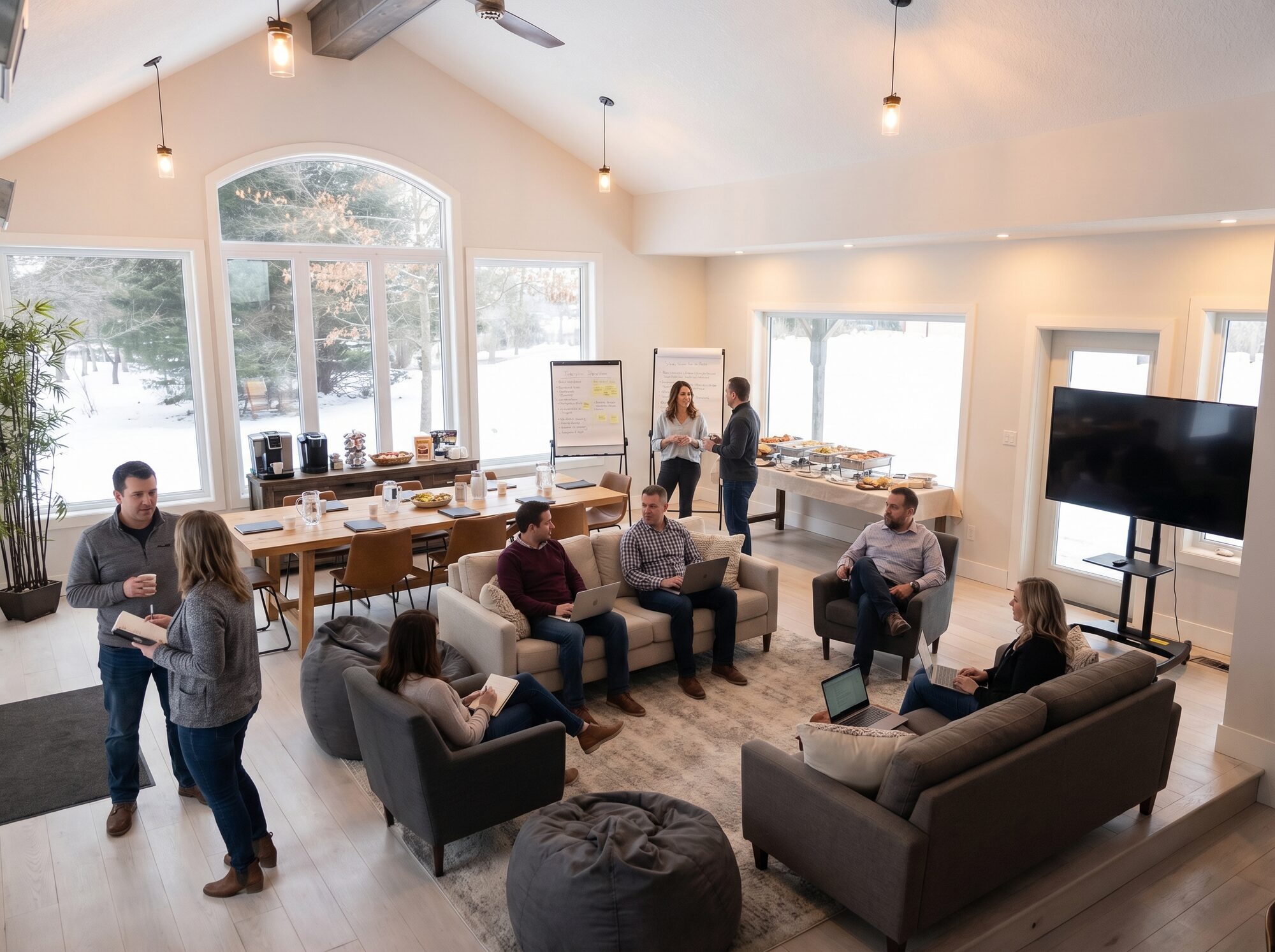
A good team retreat is not a day away from work. It is work with fewer distractions: clearer decisions, slower conversations, shared meals, and enough space for people to think before they answer.
The mistake is trying to make it too big. A useful retreat usually works best with 5 to 25 people, one clear purpose, and a setting that lets the group settle in quickly. At Fernwood Hills, that means a private forest setting near London, Ontario, with day-use space, food options, and room to move between focused work and time outside.
Start With the Decision You Need
Before you choose a date or build an agenda, name the outcome. Are you trying to align a leadership team, reset after a hard season, plan the next quarter, onboard a new group, or give people space to reconnect? One strong outcome keeps the day from turning into a mixed bag of updates.
Choose the Right Group Size
Retreats work best when everyone in the room has a reason to be there. For strategy, keep it small: founders, senior leaders, board members, or a focused department. For workshops, a slightly larger group can work if the facilitator has a clear structure.
Fernwood Hills is intentionally not built for large conferences. It is strongest for smaller teams that need calm, privacy, and direct conversation.
Build a Simple Agenda
The best retreat agendas are spacious. A practical one-day flow looks like this:
- Arrival: coffee, orientation, and a clear reason for the day.
- Morning block: the hardest decision, strategy session, or facilitated workshop.
- Meal: shared food without rushing back to a screen.
- Outdoor reset: walk the trails, sit by the fire, or use the forest as a reset between sessions.
- Afternoon block: turn ideas into owners, next steps, and dates.
- Close: name what changed and what happens next.
Plan Food Early
Food changes the pace of a retreat. It gives people a natural pause and keeps the day from feeling like a meeting in a different room. Manna by Fernwood Hills can support seasonal retreat meals, coffee, snacks, and simple food experiences depending on the date and group.
Use the Setting
If you book a forest property and spend the whole day inside, you are leaving the best tool unused. Build short outdoor breaks into the agenda. Give people time to walk, think, and come back with a cleaner answer. That is often where the real work happens.
Decide Whether You Need Facilitation
A retreat does not always need an outside facilitator. If the goal is planning, a strong internal lead can work. If the group needs hard conversations, alignment, or a reset, facilitation helps protect the process and keeps the most senior person from accidentally dominating the room.
What Fernwood Hills Is Best For
Fernwood Hills is a fit for leadership offsites, founder retreats, board planning days, coach-led group programs, wellness teams, and small organizations that need a quiet private forest setting near London, Ontario.
It is not a fit for large conferences, late-night events, or groups that need exclusive use of the whole property. The strength is focus: a smaller group, a calmer environment, and enough structure to leave with decisions.